The Wild and Wonderful
There are places where travel is about seeing something new, and then there are places where the landscape seems to rearrange your sense of time. The Masai Mara belongs to the latter. Here, the day is measured not by clocks but by the movement of animals, the changing light over the grasslands and the slow journey of the sun across an enormous African sky.
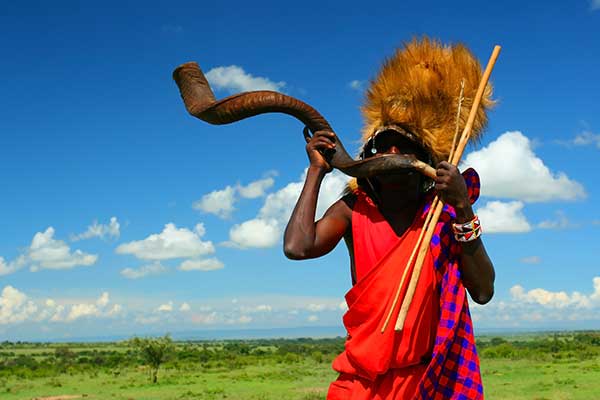
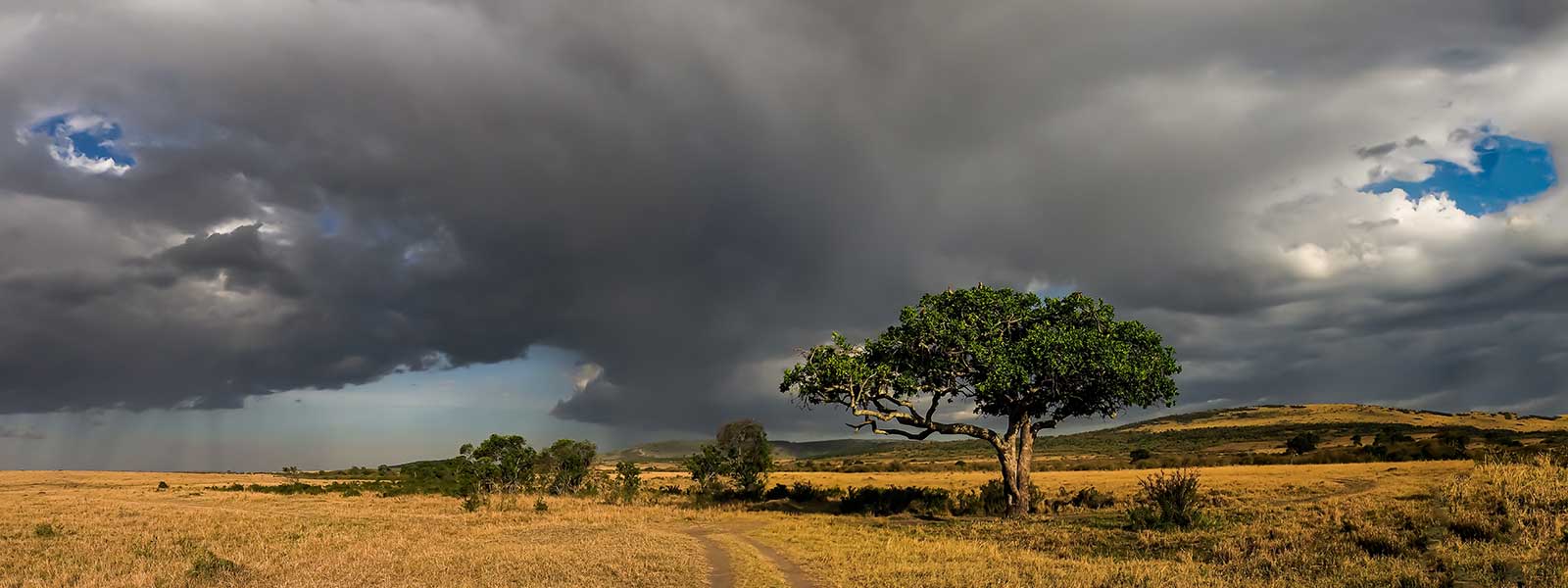
In southwestern Kenya, the Mara unfolds as a vast mosaic of open savannah, acacia-dotted plains and riverine country. The Masai Mara National Reserve forms the heart of a larger ecosystem that extends into a network of community conservancies, where wildlife protection and Masai livelihoods are closely intertwined.
And while the Mara is famous for its wildlife, some of its most memorable moments happen when the safari vehicle is parked and the wilderness becomes the setting for an altogether different kind of experience.
At The Edge Of Wilderness
Evening arrives gently in the Mara.
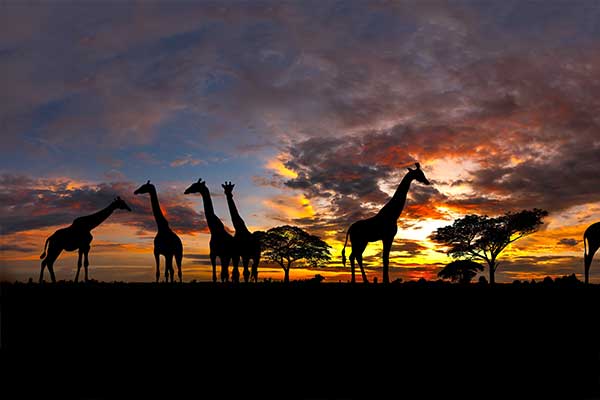
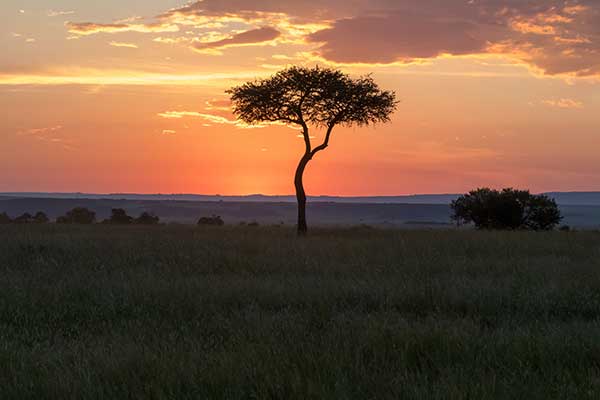
The heat of the afternoon begins to loosen its hold, the grasslands turn honey-gold and the silhouettes of acacias grow longer against the horizon. Somewhere beyond the camp, a lion could be calling or a herd of elephants be moving slowly through the distance. As the last birdsong fades as the sky changes from blue to amber, then rose, then deepening violet.
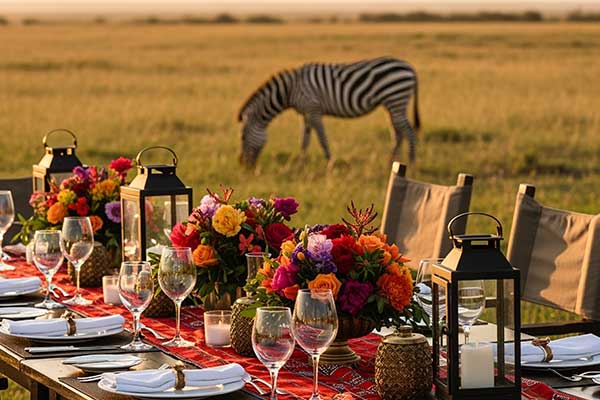
In a private conservation area, the evening can be transformed into an intimate ritual: a beautifully laid arrangement in the bush, glasses of wine catching the last light, perhaps a few canapés, and a crackling bonfire waiting for darkness. Sundowners and bush dinners are established safari traditions, with conservancies offering a more intimate experience because vehicle numbers are more limited than in the main reserve.
There is something wonderfully surreal about sipping a glass of wine in such a setting. No restaurant walls. No city lights. No soundtrack except the sounds of Africa.
The fire becomes the centre of the evening. As darkness settles over the plains, the stars emerge in astonishing numbers. Conversations become quieter. The wine tastes different here—not necessarily because of what is in the glass, but because of where you are drinking it.
Luxury in the Mara is rarely about excess. It is about having the wilderness to yourself for a little while.
Breakfast in the Wild
Morning in the Mara begins before the sun.
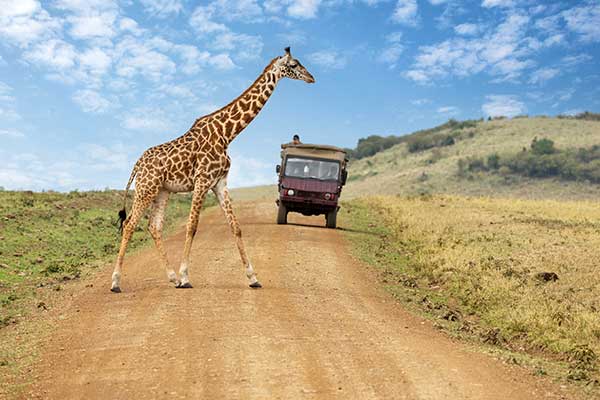
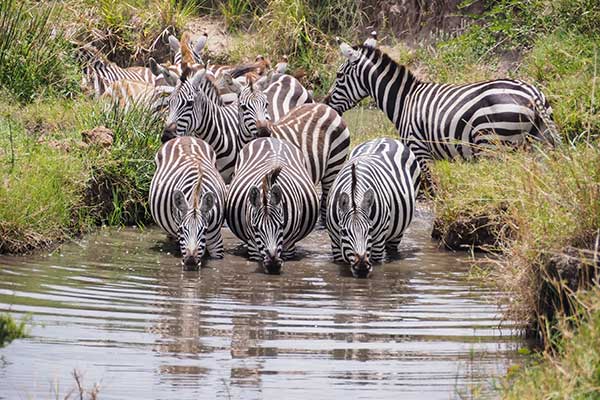
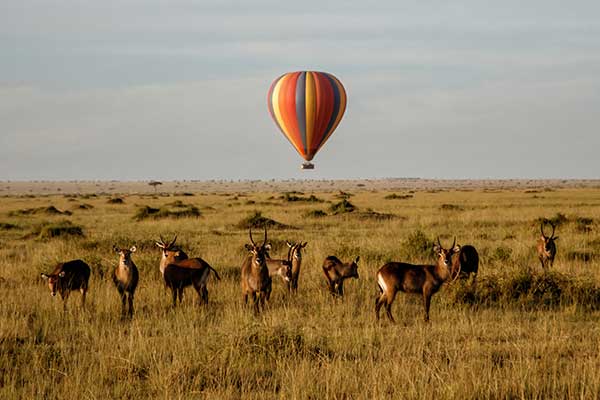
The safari vehicle slips out while the sky is still pale, the air carrying the coolness of the night. Dawn gradually spills across the plains, illuminating zebras, wildebeest and gazelles already beginning their day. Predators are often most active in the early hours, making sunrise game drives among the most rewarding experiences in the Mara.
And then, somewhere within the national reserve, breakfast appears.
A table is set in the wilderness—perhaps beneath an acacia tree, perhaps overlooking the grasslands. There is coffee, fresh fruit, pastries, eggs, bread and all the small comforts of a leisurely breakfast, except that the dining room is an extraordinary expanse of African wilderness.
A breakfast in the Mara is not simply a meal. It is a pause between two kinds of adventure.
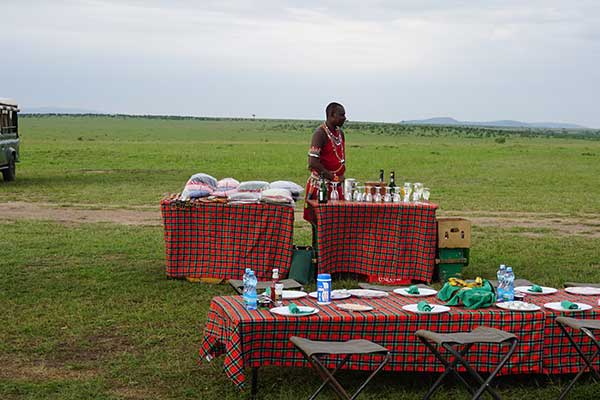
One moment you are watching a herd of elephants move across the plains; the next, you are sitting down to coffee with the savannah stretching endlessly around you. Bush meals are a well-established part of the Mara experience, with carefully selected locations and guides ensuring that guests can dine safely while remaining immersed in the landscape.
It is perhaps the most elegant way to understand the philosophy of a safari: the wild is not something you visit and then leave behind. It becomes the backdrop to everything.
The Big Five
Then comes the reason most travellers make the journey: the safari itself.
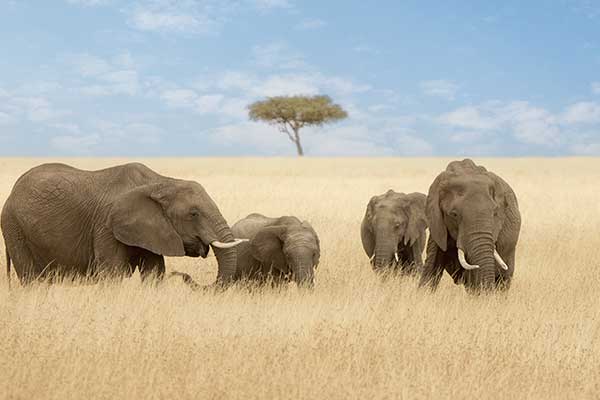
The Masai Mara is one of Africa's great wildlife theatres, renowned for its concentration of predators and its year-round opportunities for viewing the Big Five—lion, leopard, elephant, buffalo and rhinoceros.
There is no script, of course.
That is precisely the magic.
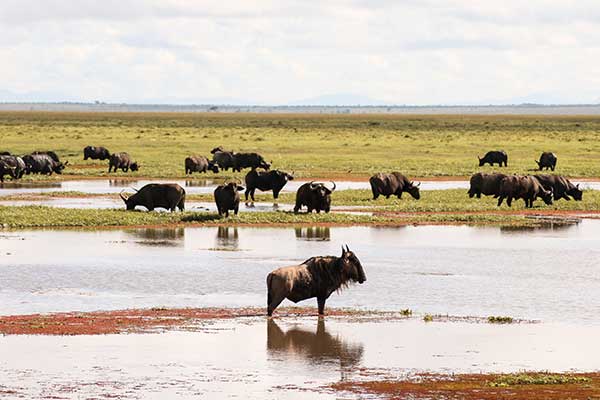
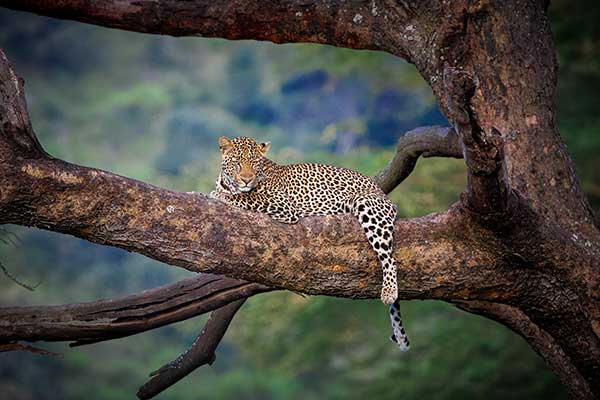
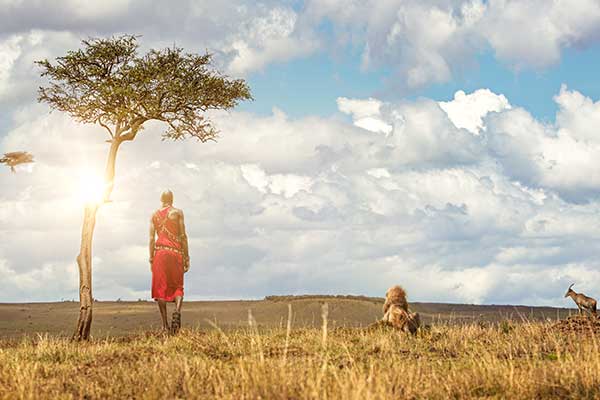
A pride of lions may be sprawled beneath a tree, barely acknowledging the vehicles around them. A solitary leopard can appear almost impossibly camouflaged among the branches or long grass, turning a routine drive into an unforgettable sighting. Elephants move with their quiet, ancient majesty, while enormous buffalo herds gather across the plains.
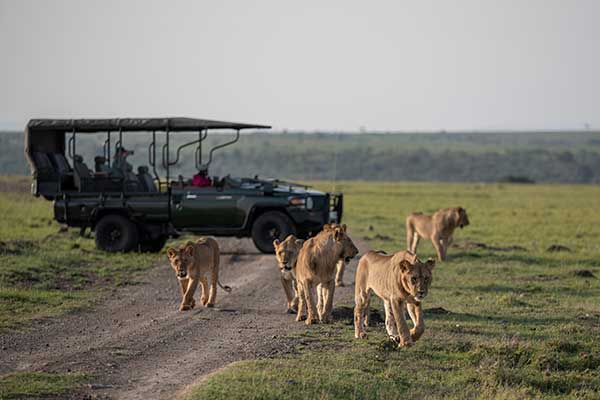
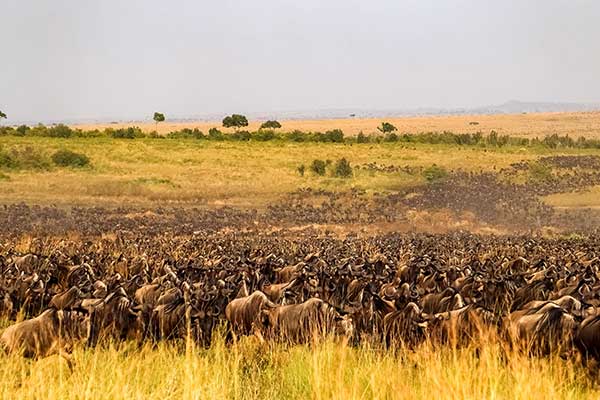
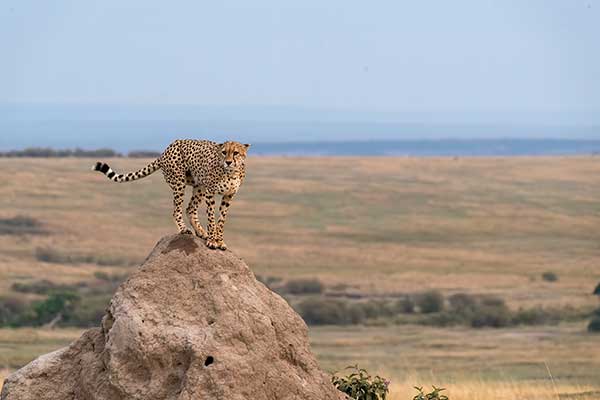
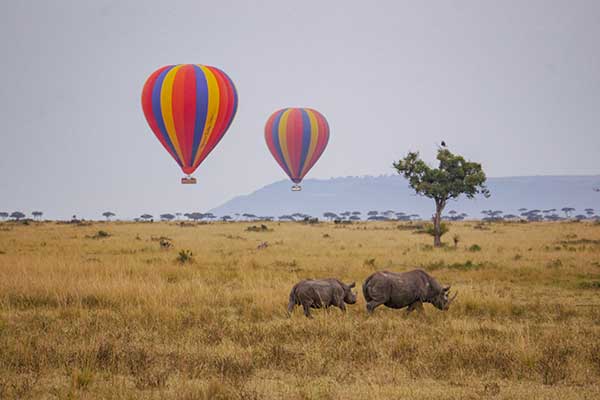
The rhinoceros is often the most elusive of the five, making its appearance feel particularly precious. And somewhere between one sighting and the next, the Mara continually offers its supporting cast: giraffes moving elegantly across the horizon, cheetahs poised for a hunt, hippos submerged in the river and vast herds of zebra and wildebeest flowing across the grasslands.
The thrill lies not merely in seeing an animal, but in witnessing a moment of its life.
A lioness watching over her cubs. Elephants greeting one another. A leopard disappearing into tall grass. A buffalo staring back at the safari vehicle as if it were the visitor who needed explaining.
A Landscape More Than Wildlife
The Mara's story is also one of conservation.
Beyond the national reserve, community conservancies have created an important model in which land is leased from Maasai landowners, tourism generates income for local communities and wildlife habitat is protected as part of a larger ecosystem. Mara North, Mara Naboisho and other conservancies have become important extensions of the Mara's conservation landscape.
This adds another dimension to the journey. The experience of sitting beside a fire under an enormous African sky is made possible not only by the beauty of the landscape, but by an evolving relationship between conservation, communities, and responsible tourism.
When the Day Becomes a Memory
Eventually, the safari vehicle returns to camp. The dust settles. The sun disappears. Somewhere beyond the darkness, the wilderness continues exactly as it has for centuries.
Perhaps there is another glass of wine waiting. Perhaps dinner is served beneath the stars. Perhaps the fire is still burning and the night is filled with distant animal calls.
The Masai Mara has a way of making even extraordinary experiences feel elemental: breakfast in the open air, wine at sunset, a fire after dark, and a day spent searching for animals that have no interest in being found.
You come looking for the Big Five. You leave with something larger—the memory of a place where luxury and wilderness do not compete, but exist beautifully side by side.